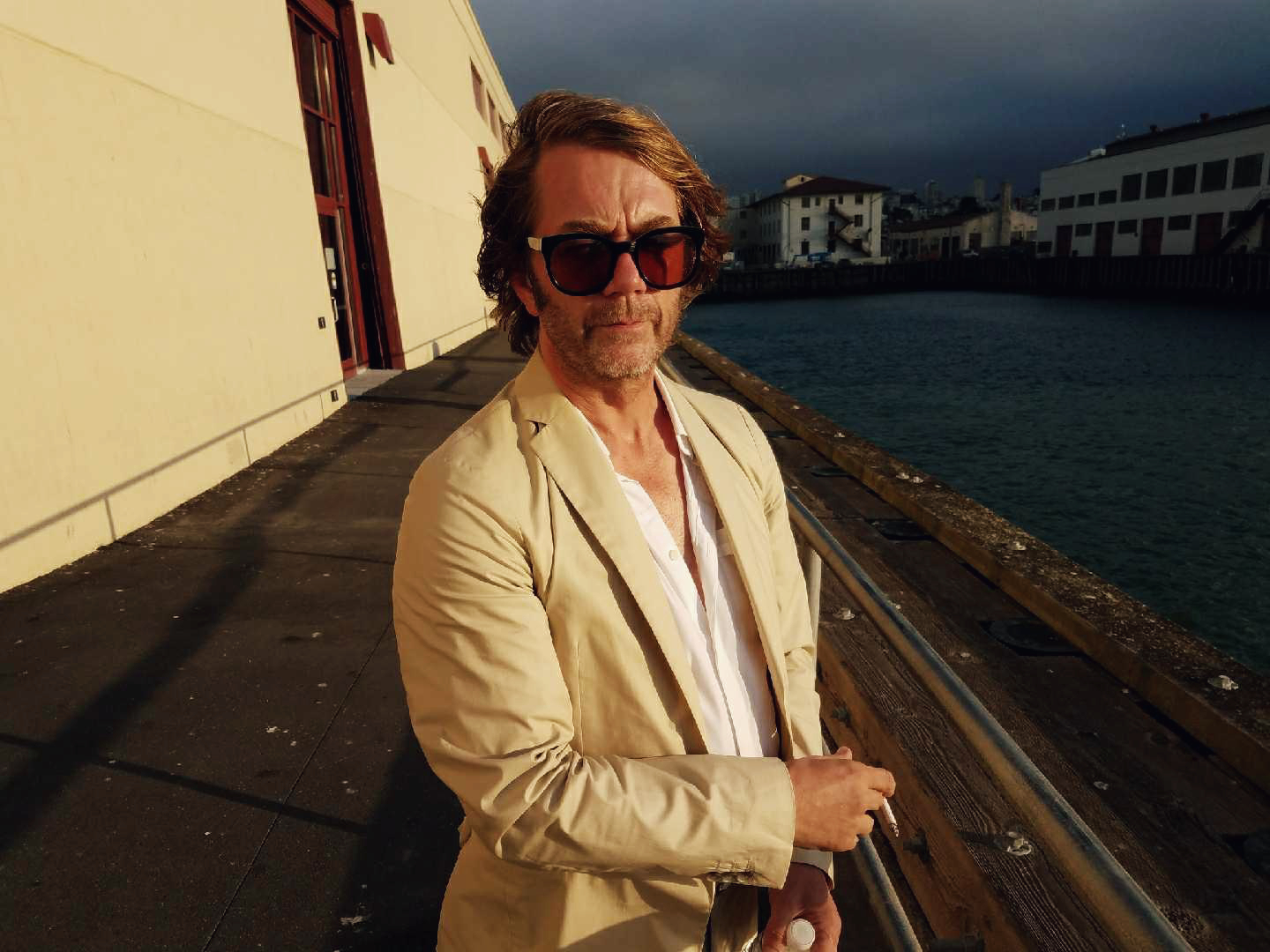
Photo credit: MJ — Howard in San Francisco.
Some People Teach Hair. Others Teach You How to Think.
Originally interviewed in 2017. Republished with a new introduction.
There are certain people in every industry who influence trends. Then there are the people who influence the people creating the trends. Howard McLaren has always belonged in the second category.
I first encountered his work in 2007 through Bumble and bumble, and over the years I've continued to return — not because I'm looking for the next haircut, but because I'm interested in how creative people continue to evolve. Reinvention has always fascinated me.
Looking back on this interview nearly a decade later, what strikes me most isn't Howard's answers. It's the questions I was asking. Long before I became a Mental Health Coach, built The Factory, or developed the philosophy that guides Lumière today, I was already searching for something beyond technique. I wanted to understand creativity, identity, discipline, and the willingness to keep becoming.
One of my favorite moments came when Howard explained that working with great art directors taught him something unexpected: the hair isn't the most important thing; everything is important. That idea has stayed with me. Hair doesn't exist in isolation. It lives alongside lifestyle, personality, confidence, wardrobe, movement, and the story someone is trying to tell about themselves.
Another lesson that still resonates is his refusal to speak in absolutes. When I asked if there was a bob for everyone, he laughed and essentially reminded me that hair has a way of proving us wrong. In this industry, certainty is often replaced by curiosity, and curiosity is what keeps artists growing.
Reading this interview today also reminds me of something I tell my own team: document your work + make it yours. Howard spoke about photography as a way to step back, evaluate, and learn from what you've created. That's true for hair, business, and life. Sometimes our old work becomes evidence of the person we were becoming long before we recognized it ourselves.
I've chosen to leave this conversation largely intact because it represents a moment in my own creative journey. It reminds me that great artists don't simply chase what's next — they remain curious enough to keep asking better questions.
— MJ Newmann
Howard McLaren: An Interview
Originally conducted by MJ, 2017
MJ: What R+Co product do you find yourself using most — on and off stage?
HMc: My favorite product I made is High Dive. It's the most successful product we have. I just knew it was going to be great. You can comb it and leave it and your hair feels like you didn't just wash it. So you have, not a dirty look, but a sort of lived-in look. It's our favorite, my favorite for my clients and for me….
MJ: What do you recommend for individuals who have minimal time to spend on their hair? Is it important to invest in a good product? Or cut?
HMc: I mean, either you get a short haircut which is just rubbing some Badlands or some Control into it. Or long hair. Long hair can be quite simple, ponytails. And that's just a shampoo, maybe something to stop the frizz, if you've got frizz. It's really finding that cut. A haircut that can be high maintenance can be a pain in the ass for someone who's not ready for it. So you have to be careful that way.
MJ: Do you believe there is a bob for everyone?
HMc: No. You know, there's a length for everybody. Maybe it's a line that's not a bob, no… I don't think so. But in saying that I had a girl two weeks ago who wasn't right for a bob and she wanted that bob and she made it work! There's a bob for everyone — who wants it. Cause you're going to have to work it. And I gave her a very severe one, there was a contrast you know, in her face and the lengths. But she worked it. And that was it… and it was great. You can never say “no” in hairdressing because the next minute someone will be like ‘Oh, look what I got’ and you're like ‘Oh, wow… Okay.’ …But bob's for the average person? Who just want to be simple? You gotta be really careful with the length. It can be… upsetting cause you'll have to work it… and if you're not ready for it…
MJ: When did you find your creative voice?
HMc: I was in Paris and I realized that I wasn't really good as a hairdresser — like, dressing hair. That's when I started learning hairdressing. French twists, hair, balance, product control. Then I felt that was my turning point in my career. And it was also working with great Art Directors on magazines who made you look at the whole thing. I always looked at the heads. And when they'd make me come back and look at everything… the hair isn't the most important; but everything's important. That was really the ‘a-ha’ moment for me; so, photography. It's a great way to do it. You can see it and you can comment on it. You can say ‘ah f--k, I wish I'd done this or that, that way’. But you've got documentation now.
MJ: Industry average is approximately 2–5 years for stylists. What motivates you to keep doing hair year after year?
HMc: I think I'm a very curious person and I still haven't done what I'm supposed to do in hairdressing so I'm still finding what, you know, where is it? You're always looking for, not what's next, but where you are and how do you move forward, so sometimes you reinvent yourself. But being aware of what you can do is so important. Instead of thinking you can do something and then you can't.
MJ: You have mentioned your love for playing synthesizers. Do you write music?
HMc: Actually, I do, yeah I'm actually doing an installation for David Lynch — his installation in L.A in October. So I create these soundscapes. It's what I do, the very first thing in the morning. Right when I wake up I work on music, it's when I'm the most clear.
MJ: What time do you wake up?
HMc: Usually, when the light comes up. I live in a glass house so… usually, 6am.
MJ: How essential do you believe travel is to one's success in life?
HMc: I mean, personally I think it's up to each individual. For me, it's so important to see different cultures. Even the hair, like mullets, are great in Spain because they have great hair for a mullet, but they don't work here. You know, so when you travel you get to just experience culture. Even through food. But it's really how you find out how a city is running by the food that they're serving and who's there.
MJ: Do you cook?
HMc: I do, yeah. I like to eat and uh people would call me a ‘foodie’ but I don't take pictures of the shit.
*Laughs*
MJ: What do you eat for breakfast?
HMc: Nothing.
MJ: Nothing!?! Coffee? Tea?
HMc: If I'm too lazy to go and get it; then nothing — just some water.
*Laughs, again*
MJ: What's an upcoming trend you'd love to see take-off?
HMc: I think crimping hair is really cool. I liked it back when, in the 80's and stuff. And I think there's lots of ways how to do it. You saw Mary — crimping, just in the front and on the bottom (of the hair). So it's again, taking old tools and rethinking how to use them.
…Like we learned during the live demonstration.
MJ: Looking forward… What's next for R+Co?
HMc: We started really getting into conditioning the scalp and the hair; so, treatments. We tend to tear the hair up a lot with products, buildup; we have to give people the stuff to help them use the products but also take care of the scalp, because that's the root of everything. Which, we just launched the product “Crown”. It will come out in the next couple of weeks.
Closing Reflection
It has been many years since the launch of Crown, and R+Co has continued to evolve. Looking back on this conversation, I'm reminded that the best artists never stop reinventing themselves.
After watching Howard work backstage to create editorial looks, and then take the stage to deliver a live demonstration for what was then his new brand, R+Co, we stepped outside to continue the conversation. The Golden Gate Bridge — a mix of wind, fog, and a vivid San Francisco sunset — provided the backdrop as we talked about reinvention, creativity, travel, music, and the curiosity that keeps great artists evolving.
Some conversations stay with you long after they're over.
— MJ